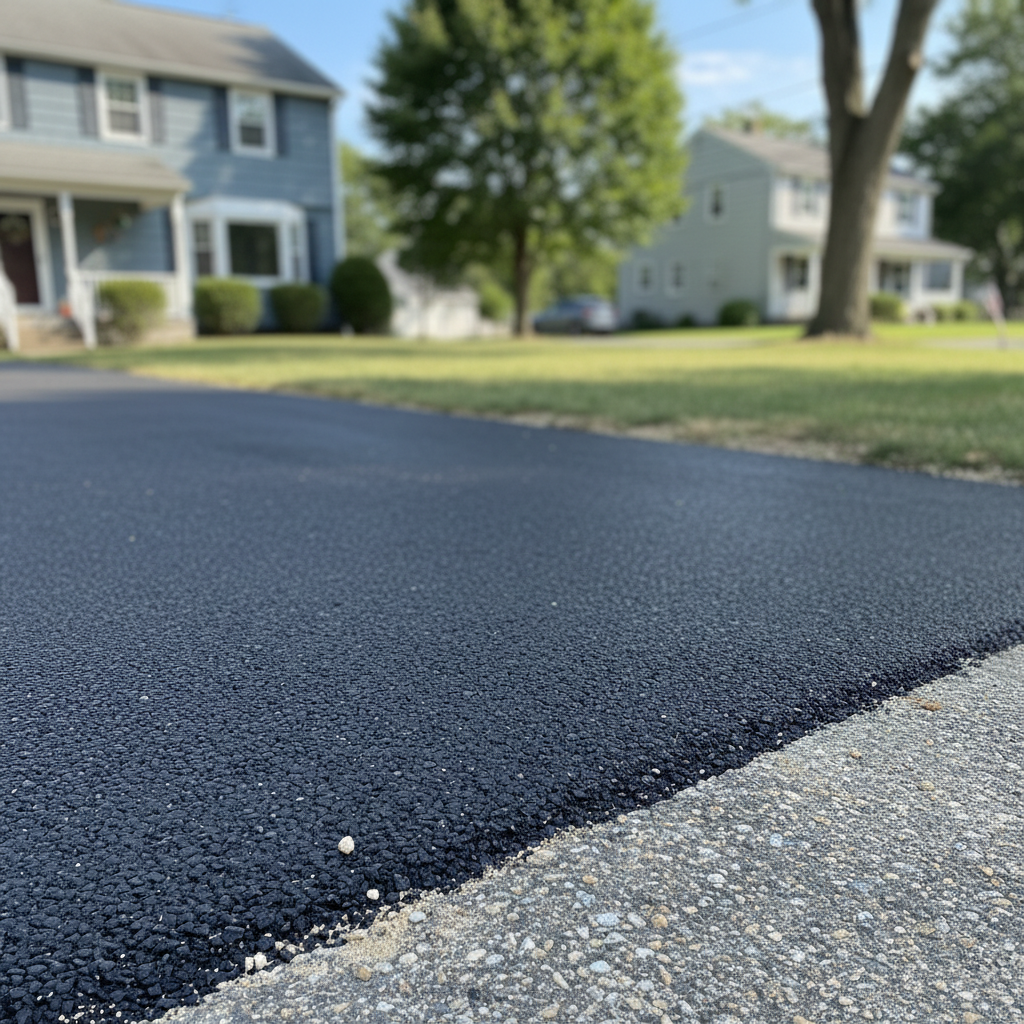
Homeowners in the Heights or down near Bergen-Lafayette often notice a chunk of asphalt missing right where their tires hit. Asphalt damage is a common issue around Jersey City. Between the freeze-thaw cycles we get every winter, road salt, and the way our old local soil settles under weight, asphalt takes a beating. When a crumbling spot or a developing pothole appears, property owners wonder whether they can fix the problem this weekend with a bag from the hardware store or if they need to call in a crew.
Before doing anything, you need to assess the actual damage. Grab a stiff broom and clean out the hole or crack so you can see what you are dealing with. If it is a simple, narrow linear crack less than a quarter-inch wide, or a very minor surface depression, you can handle that yourself with a quality cold-pour crack filler. Just sweep it out, make sure it is bone dry, and pour it in. But if you are looking at widespread alligator cracking—that web of interconnected cracks that looks like a turtle shell—or a deep pothole where the sub-base is washing away, DIY methods will not cut it. Primetime Paving sees plenty of homeowners try to fill structural failures with cold patch year after year, only to watch it pop right out the next time it rains. That is when you need professional intervention, sub-base excavation, and hot mix asphalt.
During the actual repair project, timing and preparation matter more than anything else. If you are doing a DIY patch, pick a stretch of dry days when temperatures stay consistently above 50 degrees. Clean every speck of dirt and loose gravel out of the cavity. If you are hiring pros for a larger cut-and-patch job, Primetime Paving will saw-cut clean edges around the damaged area, dig out the compromised soil underneath, tamp down a fresh stone sub-base, and lay hot asphalt that gets compacted down properly with heavy machinery. You cannot fake that compaction with a hand tamper, which is why professional patches last years longer than temporary fixes.
After the patch goes down, the curing phase begins. If you used a DIY cold patch, keep your car tires off it for at least a few days because that material stays relatively soft for a while. For a professional hot-mix patch, you will want to stay off it for 24 to 48 hours depending on the temperature outside. Once it is fully cured, keep an eye on the edges where the new patch meets the old pavement. That joint is always the first place moisture tries to sneak back in. Protecting your driveway with a quality sealcoat every couple of years will keep water out and extend the life of both your patches and your entire driveway in Jersey City, NJ.