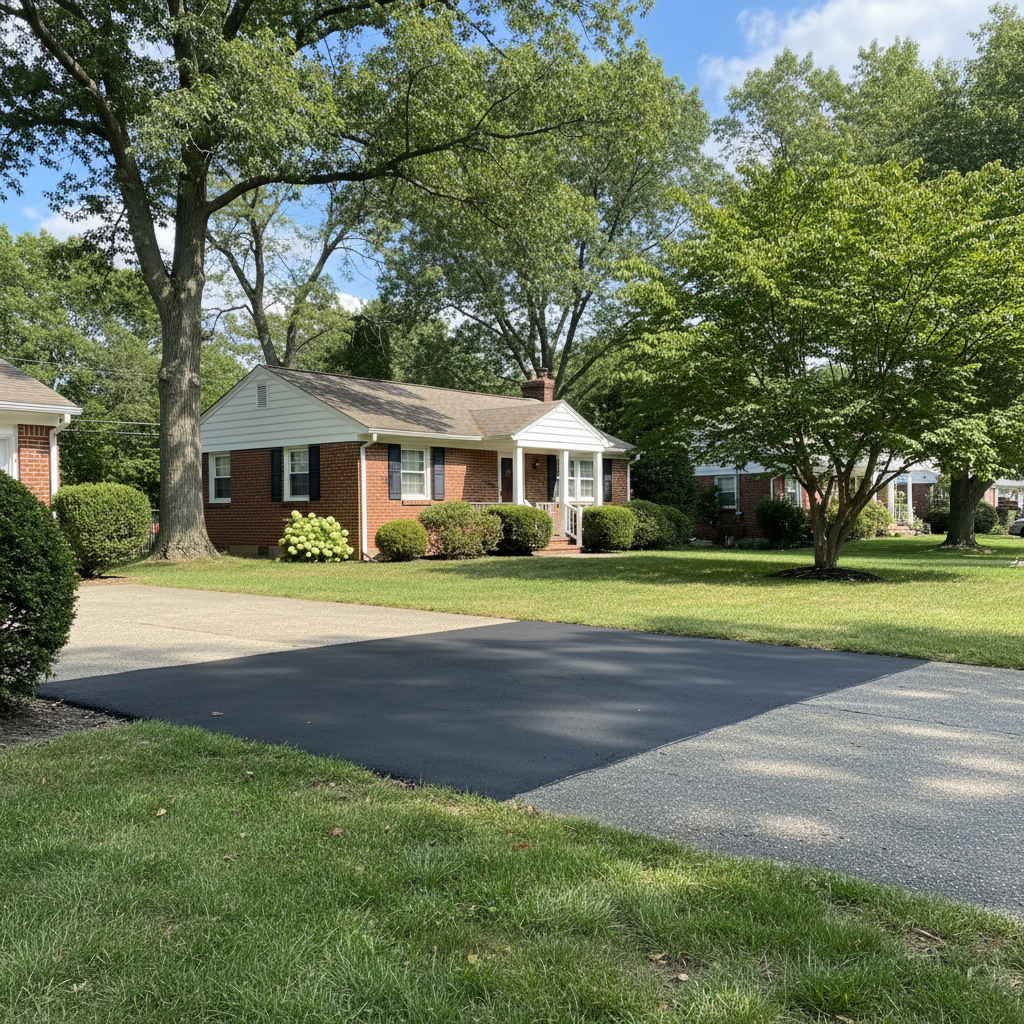
Properties with asphalt patching in Jersey City face difficult weather conditions. Between the freezing winter nights, heavy downpours, and the constant traffic rolling down narrow streets in neighborhoods like The Heights, repaired pavement takes a severe beating. Getting a patch installed is only half the battle. If you want that fix to last more than a single season, you have to look after it.
How to Extend the Life of Your Asphalt Patches
Keeping a patch strong comes down to managing water and stopping minor issues before they spread. Water is enemy number one around here. When moisture sneaks into the edges of a patch and temperatures drop below freezing, that water turns to ice, expands, and breaks apart the fresh bond.
Here is what you need to do to keep things tight:
- Seal the edges with a rubberized crack filler right around the perimeter of the patch where it meets the old asphalt.
- Keep automotive fluids like oil and gas wiped up, because chemical spills soften the binder and dissolve the patch from the top down.
- Clear out heavy snow accumulation carefully during winter storms so snowplow blades do not catch the lip of the patch and rip it out.
Warning Signs That a Patch is Failing
You can usually tell when a patch is failing if you know what to look for during a routine walkaround. Do not wait until a gaping hole opens up in your driveway or parking pad. Look out for alligator cracking forming a web pattern right across the middle of the fix, which means the sub-base underneath is shifting. If the patch starts sinking lower than the surrounding pavement, you are dealing with drainage failure or a collapsing foundation. Crumbling edges where the patch meets the old blacktop are another major red flag. Once those edges start crumbling, water pours straight underneath and ruins the entire repair.
When It's Time to Call a Professional
Some minor maintenance can be completed on a Saturday afternoon, but patching upkeep has its limits. If you notice your patch has completely failed and turned back into a loose pile of gravel, throwing a bag of cold patch from the hardware store into the hole is not going to cut it. You need a crew with the right equipment to saw-cut the damaged section out, prep the sub-base properly, and lay down hot mix. Primetime Paving sees plenty of do-it-yourself quick-fixes wash away after the first heavy spring rain because the underlying drainage was never addressed. Call in someone who can evaluate whether you need a deeper structural repair or a professional mill-and-patch job before a small headache turns into a full-scale repaving bill.