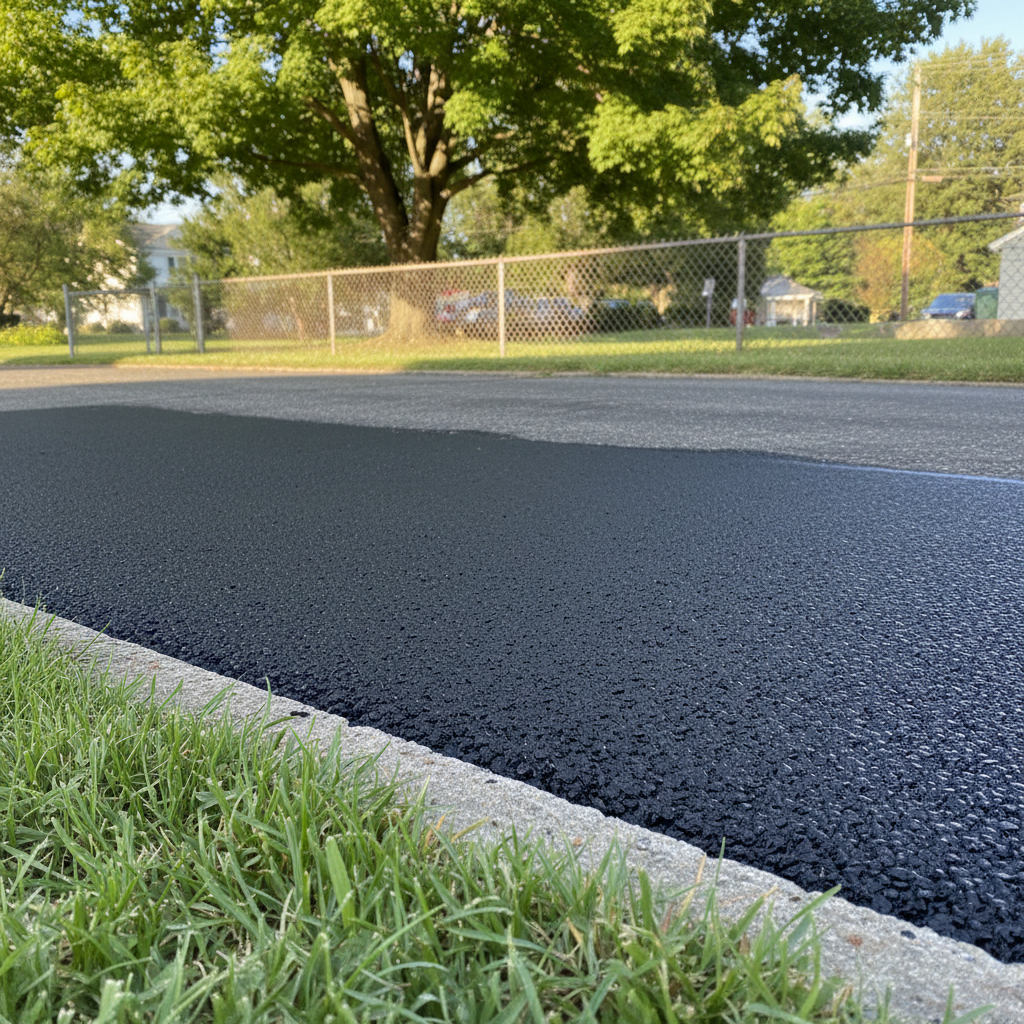
Your asphalt driveway really takes a beating, especially here in Jersey City. Between our harsh winters, with all that freeze-thaw action, and the constant traffic, it's bound to show some wear and tear. You'll probably start seeing cracks, maybe a pothole or two, and then you'll wonder: can I fix this myself, or do I need to call someone?
That's a fair question, and the answer isn't always black and white, is it? Let's break down what you need to know before, during, and after an asphalt repair job. We'll also cover when it's smart to just pick up the phone.
Before You Start: Assess the Damage
First things first, take a good, hard look at your driveway. Not all damage is created equal. You're looking for a few common culprits:
- Hairline Cracks: These are those small, thin cracks, usually less than a quarter-inch wide. Often, they're the first sign your asphalt is getting a bit old.
- Alligator Cracks: These look exactly like alligator skin. They're a series of interconnected cracks that tell you the base layer might be failing. This is a bigger deal, by the way.
- Potholes: These are depressions in the asphalt where material has completely broken away. They can be anything from small divots to full-blown craters.
- Edge Cracks: You'll find these along the perimeter of your driveway, often because there isn't enough support or heavy loads have been on it.
- Depressions/Sinking: These are spots where the asphalt has settled, creating a low area that collects water.
For hairline cracks and small, shallow potholes (we're talking less than 2-3 inches deep and just a few inches wide), you might be able to handle it yourself. Anything more extensive than that—especially alligator cracking or large, deep potholes—and you're probably looking at a job for the pros.
DIY Asphalt Repair: What You Can Tackle
If you've got those smaller issues, here's what you'll need and how to approach it:
Hairline Cracks
You'll want a pourable crack filler. Make sure the crack is clean and dry first. Use a wire brush to get out any loose debris, then blow it out with a leaf blower or compressed air. Apply the crack filler according to the product's instructions; most have a spout you can just guide along the crack. Don't overfill, though; you want it flush with the surface. Then, let it cure properly.
Small Potholes
For these, you'll use a cold patch asphalt repair product. It comes in bags and is designed for exactly this kind of thing. Again, cleanliness is key. Clear out all loose debris from the pothole. You want a solid, stable edge. If the edges are crumbly, you might need to square them off with a chisel and hammer. Pour the cold patch into the hole, mounding it slightly above the surface. Then, you need to compact it. Walk all over it, drive your car over it a few times, or use a hand tamper. The more you compact it, the better it'll hold. This stuff cures with traffic, so don't be shy about driving on it.
When to Call a Pro (That's Us, Primetime Paving)
Look, I'm all for saving a buck where you can, but some jobs are just too big or too complex for a DIY fix. Here's when you absolutely should call in a professional like Primetime Paving:
- Extensive Alligator Cracking: This means your base layer is compromised. Patching the surface won't fix the underlying problem, and those cracks will just reappear. You need a more comprehensive repair, possibly even a partial or full removal and replacement of sections.
- Large or Deep Potholes: If a pothole is more than a few inches deep or wider than a dinner plate, cold patch isn't going to cut it long-term. You need hot asphalt, which requires specialized equipment and expertise to apply and compact correctly.
- Sinking or Drainage Issues: If you've got areas that are consistently holding water, you've got a sub-base problem. This isn't just about filling a hole; it's about re-grading and ensuring proper drainage. Here in Jersey City, especially in areas like the Heights where you've got varying slopes and soil conditions, drainage is super important. You really don't want water sitting on your asphalt, especially going into winter.
- Multiple Repairs Needed: If your driveway looks like a patchwork quilt of repairs, it's time to consider a more significant solution. Sometimes, a full resurfacing or even a complete replacement is more cost-effective in the long run than endless small patches.
- Safety Concerns: If the damage is creating a tripping hazard or making it difficult to drive safely, get a professional opinion quickly.
After the Repair: Keep an Eye On It
Whether you DIY or hire a pro, keep an eye on those repaired areas. Small cracks can reappear, and patches can settle. Regular inspection is your best friend, truly. Clean off debris, and if you notice new issues, address them promptly. A little preventative maintenance goes a long way in extending the life of your asphalt. Don't let those small cracks turn into big headaches.
We've seen it all over Jersey City, from the older homes in Bergen-Lafayette to the newer developments downtown. Taking care of your asphalt isn't just about looks; it's about protecting your investment and ensuring safety. If you're unsure, or if the job just looks too big, give us a call. We're always happy to take a look and give you an honest assessment.