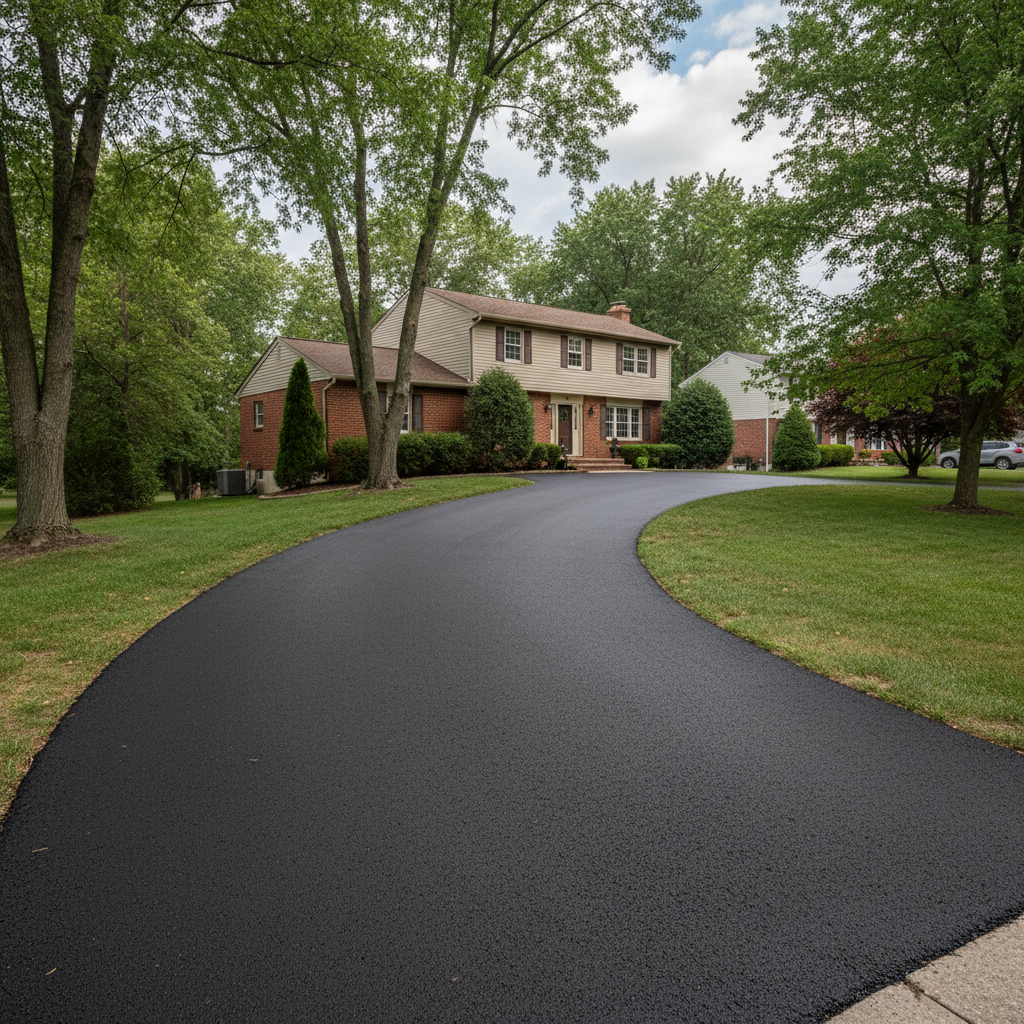
Alright, let us talk about your asphalt. You have a driveway or a parking lot, and you want it to last. That is smart. Around here in Jersey City, with our crazy weather swings as well as sometimes less-than-ideal soil conditions, your asphalt really takes a beating. The salty air near the waterfront as well as the freeze-thaw cycles that hit us every winter make it a constant battle. Primetime Paving knows that with the right approach, you can significantly extend the life of your pavement.
Extend the Life of Your Asphalt Paving
The key to making your Asphalt Paving last is not some secret trick. It is consistent as well as smart maintenance. You can think of it like taking care of your car. A little preventative work goes a long way. Our New Jersey climate, with its hot summers as well as freezing winters, is particularly tough on Asphalt Paving. The constant expansion as well as contraction from temperature changes stress the pavement. In addition, water gets into tiny cracks, freezes, expands, and pushes the asphalt apart. This creates a recipe for potholes in Jersey City.
- Keep it Clean: This sounds simple. Leaves, dirt, as well as debris can trap moisture against your Asphalt Paving. This speeds up wear and tear. Regular sweeping or power washing, especially for larger parking lots, helps get rid of oils as well as grime that degrade the surface.
- Sealcoating is Your Shield: This is not just about making it look good. Sealcoating acts as a protective barrier against UV rays, moisture, as well as chemicals. For our climate in Jersey City, applying a fresh layer every 2-3 years is ideal. This keeps the Asphalt Paving flexible and prevents cracking. It also brings back that rich black color. You must make sure it is done when temperatures are right. This is typically late spring through early fall, when it is consistently above 50-55°F, and ideally between 65-90°F.
- Address Drainage: Water is Asphalt Paving's biggest enemy. If you have standing water after a rain, that is a problem. Proper grading as well as drainage are important to prevent water from pooling. This also stops water from seeping into the sub-base. Water in the sub-base can cause erosion as well as structural failure.
- Watch the Weight: Heavy vehicles, especially when the Asphalt Paving is soft from summer heat, can cause rutting as well as damage. You should try to avoid parking heavy loads on your Asphalt Paving. This is especially true during extreme temperatures.
- Smart Snow Removal: Winter is tough in Jersey City. Use plastic shovels or snow blowers instead of metal ones. This helps avoid gouging the surface. When it comes to de-icing, choose products that are safe for Asphalt Paving. This minimizes damage. Rock salt can really chew up your pavement.
Regular Maintenance: What It Looks Like
Beyond sealcoating, regular maintenance is mostly about being observant as well as acting fast. Small problems become big problems quickly. This is especially true with our freeze-thaw cycles in New Jersey.
- Crack Filling: This is probably the most important thing you can do for your Asphalt Paving. Small cracks are inevitable. You need to fill them as soon as they appear. Water will get in these cracks. In New Jersey, that water will freeze, expand, as well as make the crack much worse. You want to stop that water from getting under the pavement and weakening the base.
- Pothole Repair: If you have potholes, get them fixed. Do this fast. Potholes are more than just annoying. They are a safety hazard. They are also a sign that water has already compromised the base layer. Prompt repair prevents them from growing as well as causing more extensive damage.
- Annual Inspections: Give your Asphalt Paving a good look-over at least once a year. This is ideally done in the spring after the winter abuse. This helps you catch issues early.
Warning Signs of Problems
Your Asphalt Paving will tell you when it is hurting. You just need to know what to look for. Do not ignore these signals in Jersey City:
- Cracks: Any cracks are a warning sign. Hairline cracks are minor. However, if they are wider than a quarter-inch, or you see long, interconnected cracks that look like alligator skin, you have a more serious issue. Alligator cracking, especially, means the damage goes deep into the sub-base. This indicates structural failure.
- Potholes: These are obvious. However, do not just drive around them. They mean the base is failing.
- Fading and Graying: Asphalt Paving should be black. If it is turning gray as well as looking brittle, it means the binding oils are oxidizing from sun exposure. This makes the surface weaker and more prone to cracking.
- Standing Water/Poor Drainage: If water pools on your Asphalt Paving after rain, your grading might be off. You might also have sunken areas. This will lead to accelerated deterioration.
- Uneven Surfaces, Dips, or Soft Spots: These are big red flags. They usually mean the sub-base underneath is weak, saturated with water, or has shifted. If you push a screwdriver into a crack and it sinks easily, the base has failed.
- Crumbling Edges: If the edges of your driveway are breaking down, it could be from lack of support. It could also be from vehicles driving over them.
When to Call a Professional
Some things you can handle yourself, like sweeping or maybe a small crack filler. However, there are times when you absolutely need to bring in the pros. Trying to do a major problem yourself usually ends up costing you more in the long run.
- Widespread Cracking: If you have alligator cracking, or cracks that are wide as well as deep (more than a quarter-inch), a simple patch will not cut it for long. This usually points to a deeper structural issue that needs professional assessment.
- Recurring Potholes: If you are patching the same potholes over and over, it means the underlying foundation is failing. That is a job for Primetime Paving.
- Significant Drainage Issues: Correcting grading problems to make sure of proper water runoff is complex. This requires expertise as well as equipment.
- Uneven or Sinking Areas: When parts of your Asphalt Paving are sinking or uneven, it indicates a compromised base layer. This needs a professional to diagnose as well as fix the root cause. It is not just about fixing the surface.
- Age of Pavement: If your Asphalt Paving is getting old (say, 15-20 years old) and showing significant wear, it might be time for a professional assessment. This determines if repair, resurfacing, or full replacement is the most cost-effective solution. Sometimes, if repair costs start to approach 30-40% of replacement costs, replacement is the smarter move.
- Any Soft or Spongy Spots: If your Asphalt Paving feels soft or spongy when you walk on it, that is an important warning sign. It means the sub-base is saturated and has failed. Get it looked at immediately.
Do not wait until a small issue turns into a huge, expensive headache. Proactive maintenance is always cheaper than reactive repairs. Give us a call at Primetime Paving if you are seeing any of these serious warning signs. We will give you an honest assessment. Our team will also help you keep your Jersey City property looking its best.